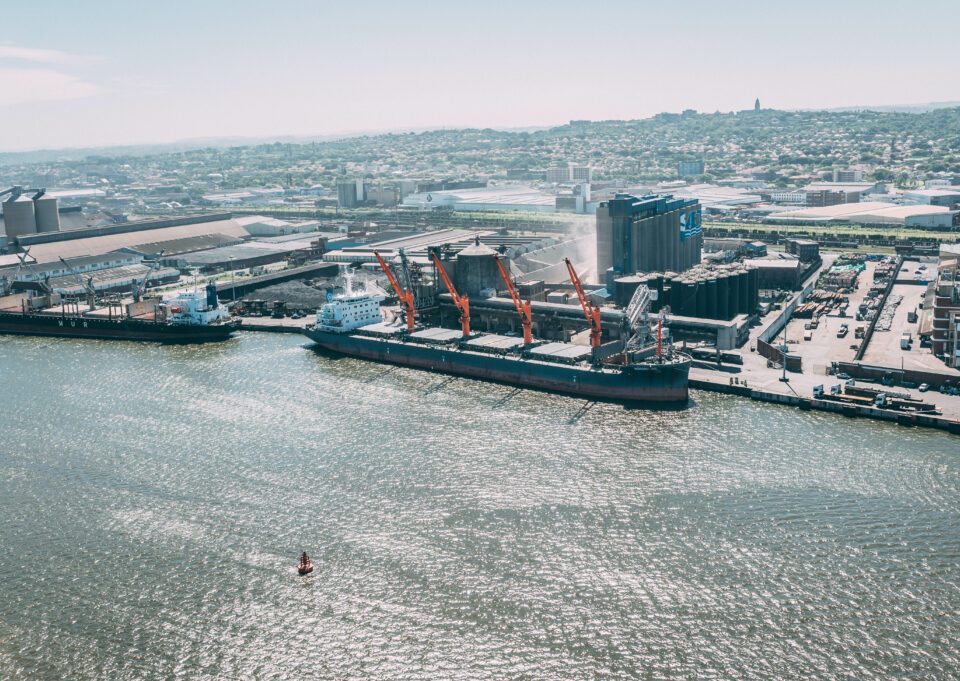
Saudi-backed port developer weighs Durban harbour deal
22/05/2025
Installation of new equipment at the Port of Cape Town is progressing steadily, with exporters already noticing improvements.
According to Terry Gale, chairman of Exporters Western Cape, four of the nine secondhand rubber-tyred gantries (RTGs) from the first batch are now operational, while the remaining five—initially used for training—were scheduled to be deployed by the end of Week 36 (early September). “Truck turnaround times have already improved since these units came online,” Gale noted.
The second batch of nine RTGs has been fully assembled, with Liebherr’s commissioning team finalising electrical work, painting, and spreader installation before endurance testing under live operations. These units, along with a third batch, are expected to be integrated faster since operator training and GPS mapping are already complete.
Cape Town’s port has long struggled with frequent breakdowns of its ageing RTG fleet and other essential equipment, a result of years of underinvestment and mismanagement linked to state capture. This has severely affected exporters of agricultural goods across the Western Cape, Northern Cape, and parts of the Eastern Cape, particularly since 2020.
Recent productivity figures indicate that ongoing collaboration, lobbying, and investment are beginning to ease costly bottlenecks. In Week 35 of 2025, the port slightly exceeded its TEU target (14,000) by handling 14,163 units, achieving 15 gross crane moves per hour (GCH) against a target of 19. While this marks progress from the 12–14 GCH seen a few years ago, it still falls short of the global benchmark of 23–24. Ship working hours averaged 35.5 compared with a 40-hour target.
The port’s final batch of 10 new RTGs is scheduled to arrive on September 5 and berth on September 6. “Delivery has been accelerated by over two months, and the units will be deployed early next year to support the latter half of the deciduous season,” Gale confirmed.
Dr Jacob van Rensburg, head of research and development at the South African Association of Freight Forwarders, highlighted that throughput gains have also been driven by the return of skilled staff to Transnet and improved communication both internally and with industry stakeholders. Still, he stressed that major infrastructure upgrades are essential and will require external partnerships. “For example, the container yard should be rebuilt to allow four-high stacking instead of three, but neither Transnet nor the Treasury currently has the funding for such large-scale investment,” he said.
Image: https://paarlpost.co.za/cape-town-harbour-woes-continue-20240131-2/